
Replacing Your HVAC System: 10 Questions to Ask Before You Buy
Sep 29th 2025
Replacing Your HVAC System – 10 Essential Questions to Ask Before You Buy
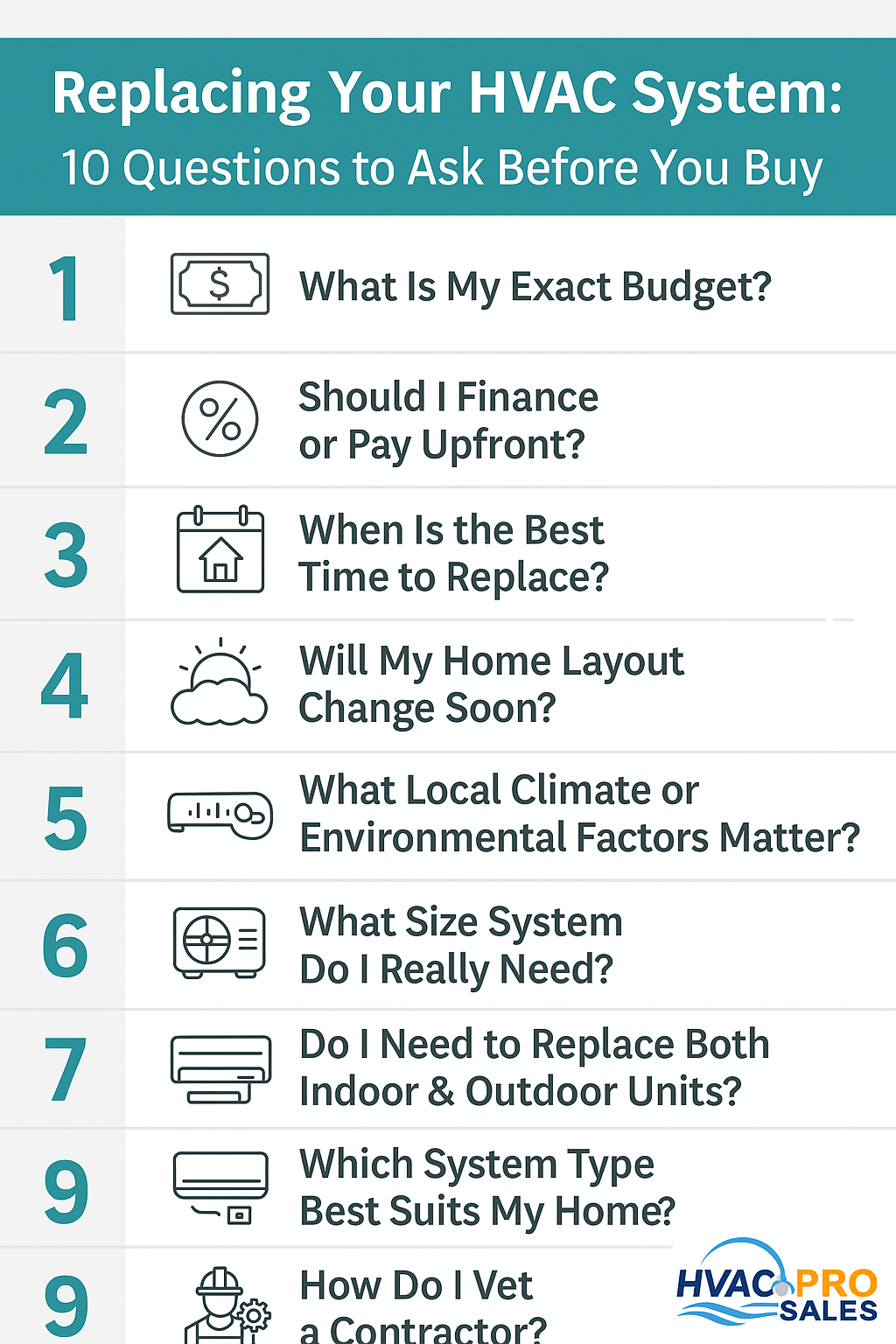
Replacing an HVAC system is a major investment—especially in hot, humid markets like Miami-Dade and South Florida where comfort and reliability matter year-round. Before you commit, make sure you (and your contractor) answer these 10 critical questions. Use this guide to avoid common pitfalls and choose a system that delivers comfort, efficiency, and durability.
As you plan your upgrade, explore our HVAC Tools, Installation Kits, and Mini Split Parts to support professional installation and long-term service.
1. What Is My Exact Budget?
Start by defining your spending limit. Quality systems and installs can vary widely—from basic replacements to high-end, high-efficiency systems with zoning and smart controls. Knowing your budget helps shape expectations for brand, efficiency rating (SEER2 / HSPF2), features, and installation scope.
2. Should I Finance or Pay Upfront?
Many homeowners spread the cost with financing. Weigh interest rates, repayment terms, and how much immediate cash you want to preserve. Some manufacturers or contractors offer promotional financing tailored to HVAC upgrades—compare these carefully against bank or credit-union options.
3. When Is the Best Time to Replace?
Replacing during off-peak seasons (fall or early winter) often means better scheduling, promotional incentives, and more time for proper design. Peak summer replacement can lead to delays, emergency pricing, and rushed decisions if the system has already failed.
4. Will My Home Layout Change Soon?
Plan ahead for additions, finished basements, enclosed patios, or extra rooms. If your home layout will change in the next few years, consider systems with zoning or ductless options that can adapt without a full redesign—such as adding ductless mini splits for new spaces.
5. What Local Climate or Environmental Factors Matter?
Cooling and heating loads vary by region. In hot, humid climates, dehumidification and indoor air quality (IAQ) features can be just as important as capacity. In colder regions, heat pump performance in low temperatures is critical. Consider filters, UV, and IAQ options if you live near traffic corridors, coastal areas, or high-pollen zones.
6. What Size System Do I Really Need?
A properly sized system avoids short cycling, poor humidity control, and premature wear. Ask your installer to perform a Manual J load calculation or at least a detailed room-by-room sizing approach. Don’t fall for the “bigger is better” myth—oversized systems are a common cause of comfort complaints.
7. Do I Need to Replace Both Indoor & Outdoor Units?
Mixing old and new components can lead to inefficiency, comfort issues, or even voided warranties. Unless your indoor or outdoor equipment is very new and explicitly compatible, replacing both sides of the system usually delivers better performance, efficiency, and reliability.
8. Which System Type Best Suits My Home?
Options include:
- Traditional split systems with ductwork
- Ductless mini splits (single or multi-zone)
- Packaged rooftop units for light commercial or certain homes
- High-efficiency heat pumps for all-electric homes
Choose a type that matches your structure, existing ducts, electrical capacity, and comfort preferences. For ductless and small-space solutions, see our Mini Split Parts section.
9. How Do I Vet a Contractor?
A great installer can make mid-range equipment perform like a premium system—and a poor installer can do the exact opposite. Check:
- Licensing and insurance
- Certifications (NATE, ACCA, manufacturer training)
- Local reviews and references
- Detailed, written proposals (not vague one-line quotes)
Ask how they handle permits, inspections, and post-install support.
10. What Are Warranty, Maintenance & Service Plans?
Understand the coverage on both parts and labor. Ask:
- How long is the manufacturer parts warranty?
- How long is the installer labor warranty?
- Is registration required for extended coverage?
- Are maintenance plans available, and what do they include?
Proper maintenance—using quality filters and genuine OEM parts—helps your system perform beyond the warranty window.
Final Thoughts
Replacing an HVAC system is about more than just cooling or heating power—it’s a long-term investment in comfort, indoor air quality, and energy efficiency. Ask these 10 questions, compare detailed proposals, and prioritize quality installation alongside good equipment.
For dependable parts, professional support tools, and accessories for HVAC projects, turn to HVACProSales.com—your source for OEM components, pro-grade tools, and job-ready installation kits.
Planning an HVAC Replacement?
Equip your installer or DIY project with contractor-grade tools, install kits, and OEM replacement parts. Get set up for a smooth change-out and fewer callbacks.
Shop HVAC Installation Kits Shop HVAC Tools & Meters