
How to Choose the Right HVAC Multimeter: A Technician's Guide
Oct 31st 2025
Why Every HVAC Technician Needs a Quality Multimeter
If you could only have one tool in your HVAC toolkit, a quality multimeter might be the most important. From diagnosing electrical issues to verifying system performance, this essential tool is your window into the electrical heart of any HVAC system—whether you’re working on a heat pump in Miami–Dade or a gas furnace in a colder U.S. climate.
On today’s jobsites, a meter isn’t just “nice to have”—it’s the difference between guesswork and professional diagnostics. That’s why so many techs standardize on HVAC-specific meters from brands like Fieldpiece, SUPCO, and Zebra Instruments, available in our Multimeters & Clamp Meters section.
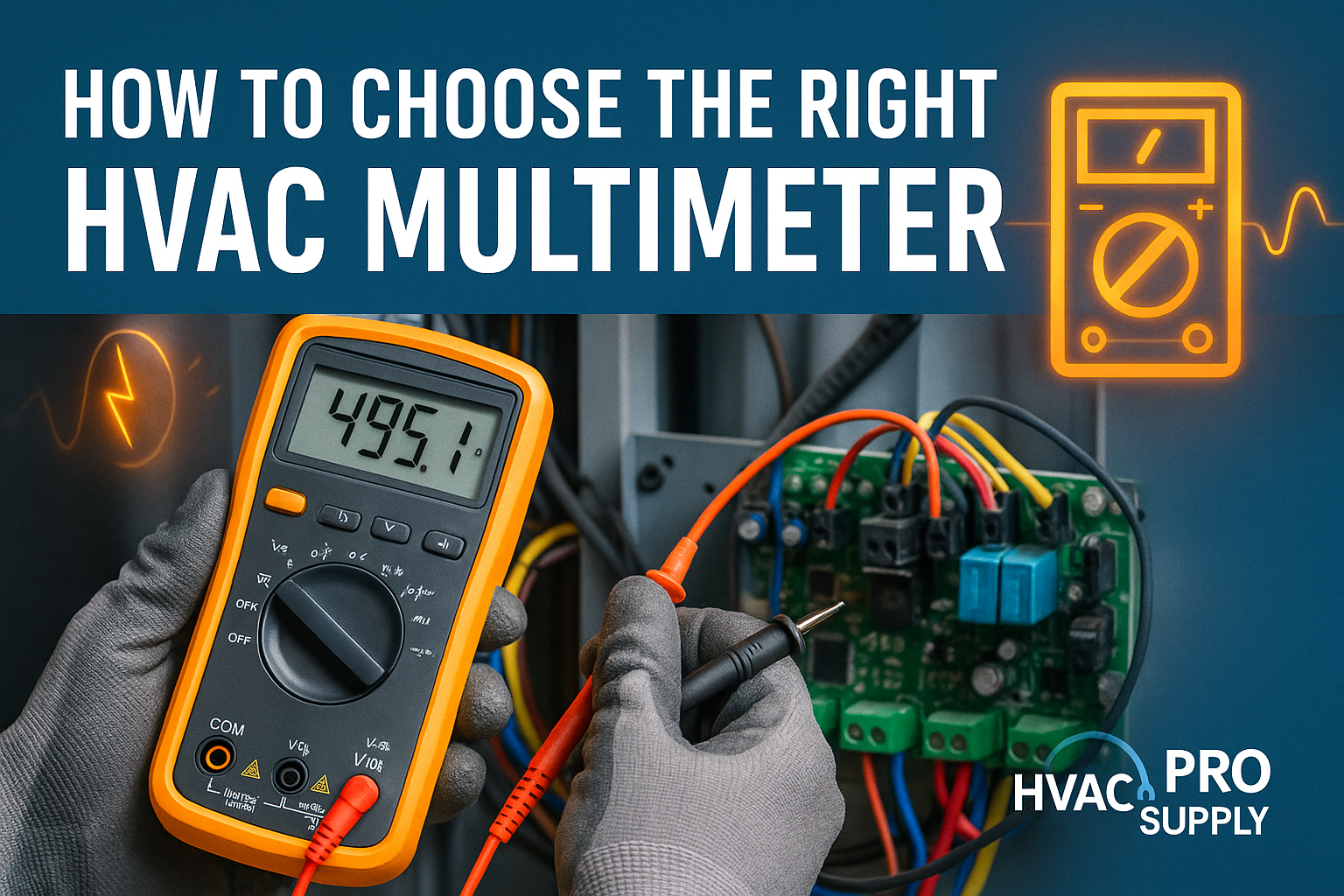
Key Features to Look For in an HVAC Multimeter
Not all meters are created equal. A bargain DIY meter may work on a simple outlet test, but it can fall short—or become unsafe—on modern HVAC equipment. When you’re choosing your next meter, look for these must-have features:
- True RMS (Root Mean Square): Essential for accurate readings on variable frequency drives (VFDs) and non-linear loads found in modern air handlers, condensers, and ECM motors. Without True RMS, your voltage and current readings on these systems can be significantly off.
- Microamps (µA) for Flame Sensor Testing: A meter that can read low DC microamps lets you properly test flame rectification circuits on gas furnaces and boilers. This is critical for diagnosing nuisance lockouts and ignition complaints.
- Capacitance Measurement: For testing motor run capacitors—a common failure point in condensers, fan motors, and blower motors. With capacitance mode, you can verify if a capacitor is weak or out of spec and match it with replacements from Capacitors & Hard Start Kits.
- Temperature Capability: A meter with built-in temperature measurement and compatible probes allows you to check line temperatures, discharge air temperature, and assist in calculating superheat and subcooling. Pair it with tools from Digital Thermometers & Manifolds for complete diagnostics.
- Safety Rating (CAT III or CAT IV): A proper category rating and voltage range are vital for protection against voltage transients. For HVAC work, look for at least CAT III on common equipment, and always use properly rated test leads.
Common HVAC Multimeter Applications
A good HVAC multimeter earns its place on your tool belt every day. Some of the most common applications on residential and light-commercial calls include:
Voltage Checks:
Verifying 24V at the thermostat and control circuits, confirming 120/240V at the disconnect, and checking line voltage under load. This helps catch loose neutrals, low-voltage issues, and power problems before you condemn components.
Continuity Testing:
Verifying whether fuses, switches, safeties, and wiring paths are intact. Continuity and ohms testing help you quickly isolate open circuits in safeties, pressure switches, and limit chains.
Component Testing:
Measuring resistance on contactor coils, relays, crankcase heaters, and motor windings. Combined with visual inspection and nameplate data, your meter tells you if a component is truly failed or if you need to keep digging.
Capacitor Testing:
Differentiating between “weak” and completely failed run capacitors. A meter with capacitance mode lets you verify microfarad values against the rating so you can replace with the correct parts from Capacitors & Hard Starts.
When paired with other tools in HVAC Tools & Instruments—like clamp meters, digital manifolds, and diagnostic analyzers—your multimeter becomes the center of a complete electrical and system performance testing workflow.
Safety First: Proper Multimeter Use
The best meter in the world can become dangerous if it’s used carelessly. Make safety part of your routine on every call:
- Always start with the highest voltage range when you’re unsure of circuit voltage.
- Use CAT-rated test leads in good condition—no cracked insulation or loose tips.
- Verify the meter on a known live source before and after testing unknown circuits.
- Keep fingers behind the finger guards on leads and avoid working on live circuits when possible.
- Follow lockout/tagout procedures on high-voltage equipment and rooftop units.
Many manufacturers recommend periodic calibration. For critical diagnostics and warranty work, a calibrated meter is part of your professional standard—especially if you’re documenting readings for customers or OEM support.
Frequently Asked Questions
Q: Can I use any multimeter for HVAC work?
A: Basic meters can handle simple voltage checks, but HVAC-specific multimeters with capacitance, temperature, microamp (µA) measurement, and True RMS are strongly recommended for comprehensive diagnostics. They’re designed for real HVAC tasks like flame sensor testing, capacitor checks, and VFD systems. You can compare options in Multimeters & Clamp Meters.
Q: How often should I calibrate my multimeter?
A: For professional field use, most manufacturers recommend annual calibration. You should also consider calibration—or at least verification against a known reference—any time the meter is dropped, exposed to water, or starts showing inconsistent readings.
Q: Should I carry a separate clamp meter or use a combo unit?
A: Many HVAC techs prefer a combo multimeter with clamp functionality to reduce the number of tools on their belt. Others carry a dedicated clamp meter along with a smaller meter for controls. The right choice depends on your workflow and how often you’re measuring running amps on compressors, motors, and heaters.
Ready to Choose Your Next HVAC Multimeter?
Equip your truck with a professional-grade HVAC multimeter that can handle everything from low-voltage controls to VFD systems—backed by fast shipping across the U.S.
Shop HVAC Multimeters & Clamp Meters Shop All HVAC Tools & Instruments