
13 Types of Air Conditioners (2025) | How to Choose
Sep 8th 2025
13 Types of Air Conditioners & Guide to Choosing the Right One (2025)
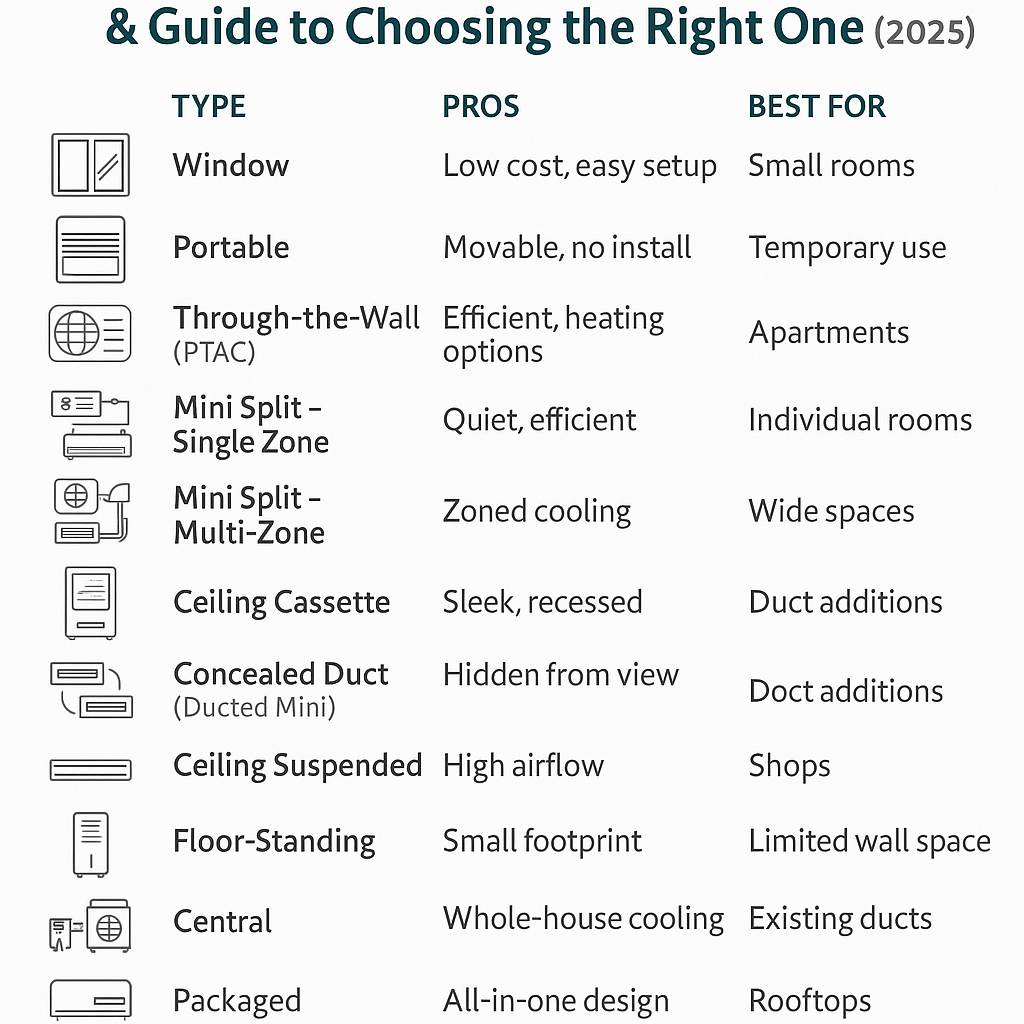
From simple window units to multi-zone ductless systems and rooftop packages, today’s air conditioning options cover every space and budget. This guide explains 13 common AC types, who they’re best for, and how to choose confidently. Whether you’re cooling a condo in Miami-Dade or a small shop anywhere in the U.S., the decision starts with understanding your options.
When you’re ready to install or maintain your system, shop our Mini Split Parts, HVAC Tools, Installation Kits, and Accessories for fast dropship delivery.
Quick Comparison
| Type | Typical Capacity | Install Complexity | Best For |
|---|---|---|---|
| 1) Window | 5k–12k BTU | Low | Small rooms, rentals |
| 2) Portable | 8k–14k BTU | Low | Temporary cooling |
| 3) Through-the-Wall / PTAC | 7k–15k BTU | Medium | Hotels, apartments |
| 4) Mini Split — Single Zone | 9k–24k BTU | Medium | Add-ons, garages |
| 5) Mini Split — Multi-Zone | 18k–48k BTU+ | Medium–High | Whole-home zoning |
| 6) Ceiling Cassette (Ductless) | 9k–24k BTU | Medium | Open rooms, clean look |
| 7) Concealed Duct (Ducted Mini) | 9k–36k BTU | High | Hidden install, short ducts |
| 8) Ceiling Suspended | 18k–36k BTU | Medium | Shops, long throws |
| 9) Floor-Standing | 9k–24k BTU | Low–Medium | Limited wall space |
| 10) Central Split (Ducted) | 2–5 tons | High | Whole house with ducts |
| 11) Packaged / Rooftop (RTU) | 3–20 tons | High | Light commercial |
| 12) VRF / VRV | 3–30+ tons | High | Larger multi-zone buildings |
| 13) Evaporative (Swamp Cooler) | 2–5 tons equiv. | Medium | Dry climates |
1) Window Air Conditioners
Affordable and easy to install, window units cool a single room with minimal setup. Modern models include timers and Wi-Fi control. Pros: low cost, plug-and-play. Cons: blocks window, higher noise, less ideal for long-term primary cooling in hot, humid regions.
2) Portable Air Conditioners
Roll-in convenience and simple venting. Best for renters or temporary spaces where window units aren’t allowed. Expect slightly lower efficiency than window units and remember to vent them properly.
3) Through-the-Wall / PTAC
Wall-sleeve systems commonly used in hotels and apartments. They offer heat pump or electric heat options and straightforward service access. Good choice for multi-room properties where each space needs its own control.
4) Mini Split — Single Zone
Quiet, efficient cooling and heating for a single room, garage, office, or addition. Ideal where ductwork is impractical or expensive to add. Explore Fujitsu for premium comfort and reliability, and stock up on Mini Split Parts and Installation Kits for a clean, code-compliant install.
5) Mini Split — Multi-Zone
One outdoor unit powers multiple indoor heads—perfect for multi-room comfort with independent temperature control. Great for homes without existing ducts or where zoning is important (upstairs vs. downstairs, bedrooms, offices, etc.).
6) Ceiling Cassette (Ductless)
Flush-mounted indoor units distribute air evenly from the ceiling and preserve wall space. A strong choice for open living areas, showrooms, and retail spaces where aesthetics matter.
7) Concealed Duct (Ducted Mini)
A low-profile air handler hides in a soffit, attic, or closet, feeding short duct runs for discreet room supply/return. Proper static pressure design and condensate management are critical. Use quality HVAC Tools, Copper Piping, and Drain Kits to keep performance and reliability high.
8) Ceiling Suspended
Surface-mounted units with long throw—ideal for shops, classrooms, gyms, and long rooms where wall space is limited. Simple service access and strong airflow make them popular for light commercial spaces.
9) Floor-Standing
Compact footprint with convenient service access; useful when wall-mounting isn’t possible or when you need lower-level air distribution, such as in tall rooms with large windows.
10) Central Split (Ducted)
The classic whole-home system paired with a furnace or air handler. Requires ductwork and professional installation. For best performance, maintain clean filters and registers and support the system with Accessories like properly sized grilles, pads, and line set covers.
11) Packaged / Rooftop Units (RTU)
All-in-one equipment commonly installed on retail and office roofs. Ideal for light commercial buildings where indoor space is at a premium and service access from the roof is preferred.
12) VRF / VRV Systems
Advanced multi-zone technology that modulates refrigerant flow for high efficiency and precise control. Best for larger buildings with diverse load profiles, mixed-use spaces, and projects where energy savings justify higher upfront cost.
13) Evaporative (Swamp Coolers)
Use water evaporation to cool air efficiently in dry climates. They draw less energy than traditional refrigeration but add humidity—making them a poor fit for hot, humid regions like coastal Florida and the Southeast.
How to Choose the Right AC
- Room size & load: As a rough guide, ~20 BTU per sq. ft. Adjust for ceiling height, sun exposure, windows, and occupancy.
- Existing ducts: If you don’t have ductwork, mini split options (single or multi-zone) can be more cost-effective than adding ducts.
- Climate: Dry regions can use evaporative cooling; humid areas like Miami benefit from traditional refrigeration systems with good dehumidification.
- Noise & aesthetics: Mini split wall mounts and cassettes run quiet and provide a clean, modern appearance.
- Install complexity: DIY-friendly units exist, but pro installs protect performance, safety, and warranty.
- Maintenance & parts: Choose brands with accessible service networks and readily available OEM parts.
- Controls & efficiency: Inverter systems, smart thermostats, zoning, and proper sizing reduce energy costs over the life of the system.
Recommended Brands
- Fujitsu — premium ductless comfort, high efficiency, quiet operation.
- Panasonic — efficient multi-zone systems, cassettes, and ventilation solutions.
- Friedrich — reliable room AC, PTAC, and ductless solutions with contractor support.
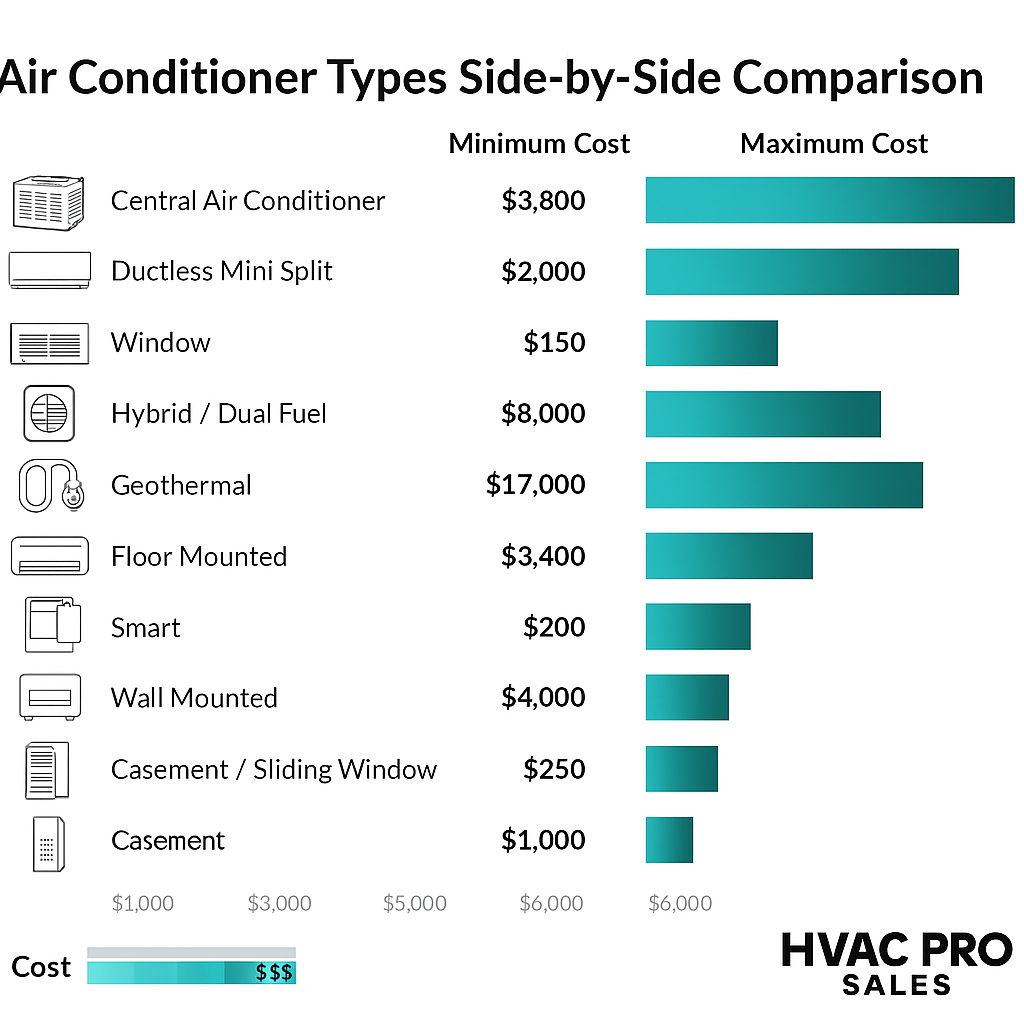
Essential Tools & Supplies
- HVAC Tools — vacuum pump, manifolds, torque wrenches, flaring tools.
- Installation Kits — line sets, fittings, wrap, wall sleeves, mounting hardware.
- Copper Piping — durable, code-compliant refrigerant lines for pro installs.
- Drain Kits — clean condensate management for fewer callbacks.
- Workwear & PPE — safety gear for every install and service call.
Bottom Line
Start with your space, climate, and comfort goals, then match the system type to your budget and installation constraints. For dependable parts, tools, and brand guidance, HVACProSales.com has you covered with contractor-grade supplies and fast shipping.
Planning a New AC Install or Upgrade?
Equip your project with professional-grade parts, tools, and install kits for a smoother start-up and fewer callbacks.
Shop AC Installation Kits Shop Mini Split Parts